
Depalletizing cases is the first step in the Automated Decant process. The percentage of cases requiring depalletizing has increased dramatically to reflect the replenishment demand for automated ASRS fulfillment systems. Performing this manually is labor intensive, inefficient and the greatest work hazard to operators inside warehouses with workers having to lift between 18,000 and 25,000 lbs. of cases per shift!


Palletized cases are indexed on pallet conveyor, lift equipment or with AMRs in sequence to the Six Axis Robotic Depalletizing Cell with Ai Vision to unload uniform and mixed case pallets onto conveyor for a barcode ID scan. In one robotic move cases can be scanned into inventory and eliminate ergonomic risk, while providing a consistent and higher rate of cases for receiving and replenishment
More mixed case pallets are being created which requires more mixed case depalletizing on inbound. The increased complexity of mixed case pallets requires Ai 3D Vision to support a wider eligibility range of case and pallet patterns as well as uniform pallets that can include multiple cases per move. Increasing case and pallet eligibility increases throughput.

Automated depalletizing Increases case rate with more consistent workflow and reduces Labor expense and ergonomic risk hazards for both repetitive motion and overextension strain injuries. Operators supervise higher case volume and manage the automation, creating higher worker satisfaction and boosting operator morale and retention.
The robotic depalletizing work cells can be configured in a variety of layouts to accommodate single or multiple inbound pallets fed to the robotic cell by pallet conveyor, lift equipment or AMRs. Robotic depalletizing cells are typically integrated with conveyor and scan tunnels to manage inbound tracking to next automation steps. Modular Robotic depalletizing cells are another option and are easily relocated to accommodate expansion or seasonal workflow.

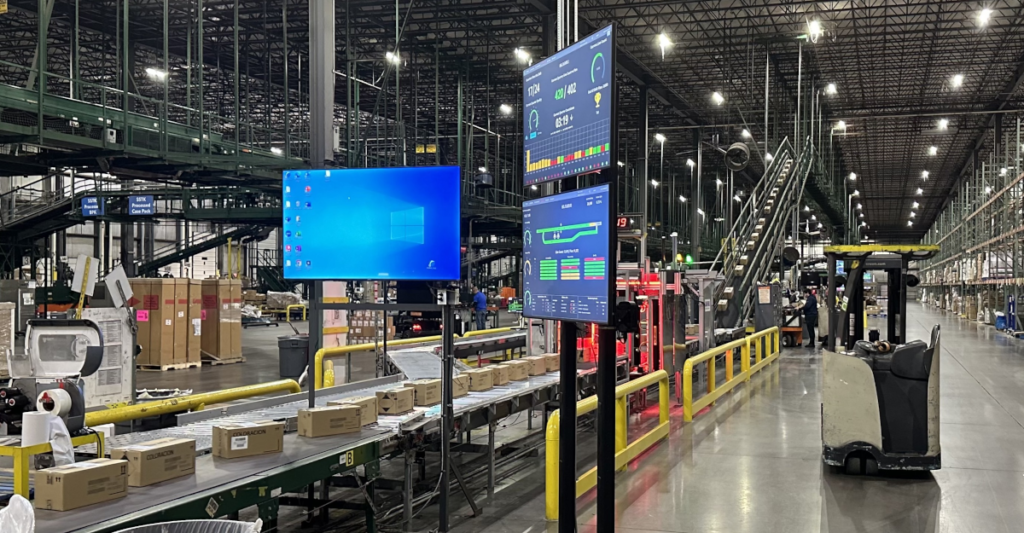
The Depalletizing System is managed by our Remote Monitoring & Support – MRO program. RMS economically delivers case level real time event logging, the highest quality service support and troubleshooting to ensure the best ongoing value throughout the system’s lifecycle and minimizing the cost of ownership. The RMS system provides maximum uptime through continuous remote monitoring and secure VPN diagnostics.
Operators and maintenance teams have real-time visibility of performance metrics and inbound case data. The component level status enables proactive-preventative maintenance and rapid troubleshooting resolution without on-site service requirements. Automated alerts, event tracking log reports, remote software and program updates, and expert engineering support teams ensure the system remains reliable around the clock, helping warehouses achieve 99% uptime.