
Decant automation is the equipment and software that opens cases at the dock or in replenishment and moves their contents into totes, without a person cutting open every box by hand. It sits downstream of depalletizing and upstream of automated storage, and it has become the highest-labor step in most receiving and replenishment operations. Nearly 75% of inbound pallet and case inventory now requires inner-pack contents to move into a tote before an automated storage or fulfillment system can use it, and a large share of that volume is eligible for a single robotic move from case to tote.
The core action is simple to describe and hard to do by hand at volume: open the case, verify what is inside, and transfer the contents into a tote sized and sequenced for whatever comes next, an AS/RS, a goods-to-person cell, or a piece-pick station. A six-axis robot with a servo-driven cutting tool and 3D point-cloud vision handles the opening step, holding cut tolerance to 0.1mm so the tool never damages what is inside, even on a case that has been crushed or resealed in transit. Cases run from as small as 6 inches by 4 inches by 2.5 inches up to 30 by 24 by 24, with a 40-inch option for oversized freight. Symmetrical, uniform items, toothpaste, shoe boxes, soft goods, transfer to a tote in one robotic move. Items that need a closer look, cosmetics with fragile packaging or pharmaceuticals with lot and expiration tracking, route instead to a semi-automated station where an operator finishes the transfer and any required QC check.
Decanting sits between depalletizing and storage, not at the dock door. Dock scheduling, ASN matching, and the scan tunnel that identifies and verifies each case belong to the receiving side of the operation, covered in full on the Warehouse Receiving hub. Decant automation picks up once a case is already identified: it opens the case, transfers the contents, and hands a manifested tote to storage or replenishment.
That handoff matters for dock-to-stock automation. A facility can automate scanning and identification at the dock and still bottleneck at decant if box opening and tote transfer stay manual, because the case sits opened and staged, another instance of the double- and triple-handling that slows dock-to-stock time everywhere it shows up. Closing that gap is what turns a receiving automation project into a complete dock-to-stock automation chain, not two disconnected upgrades.
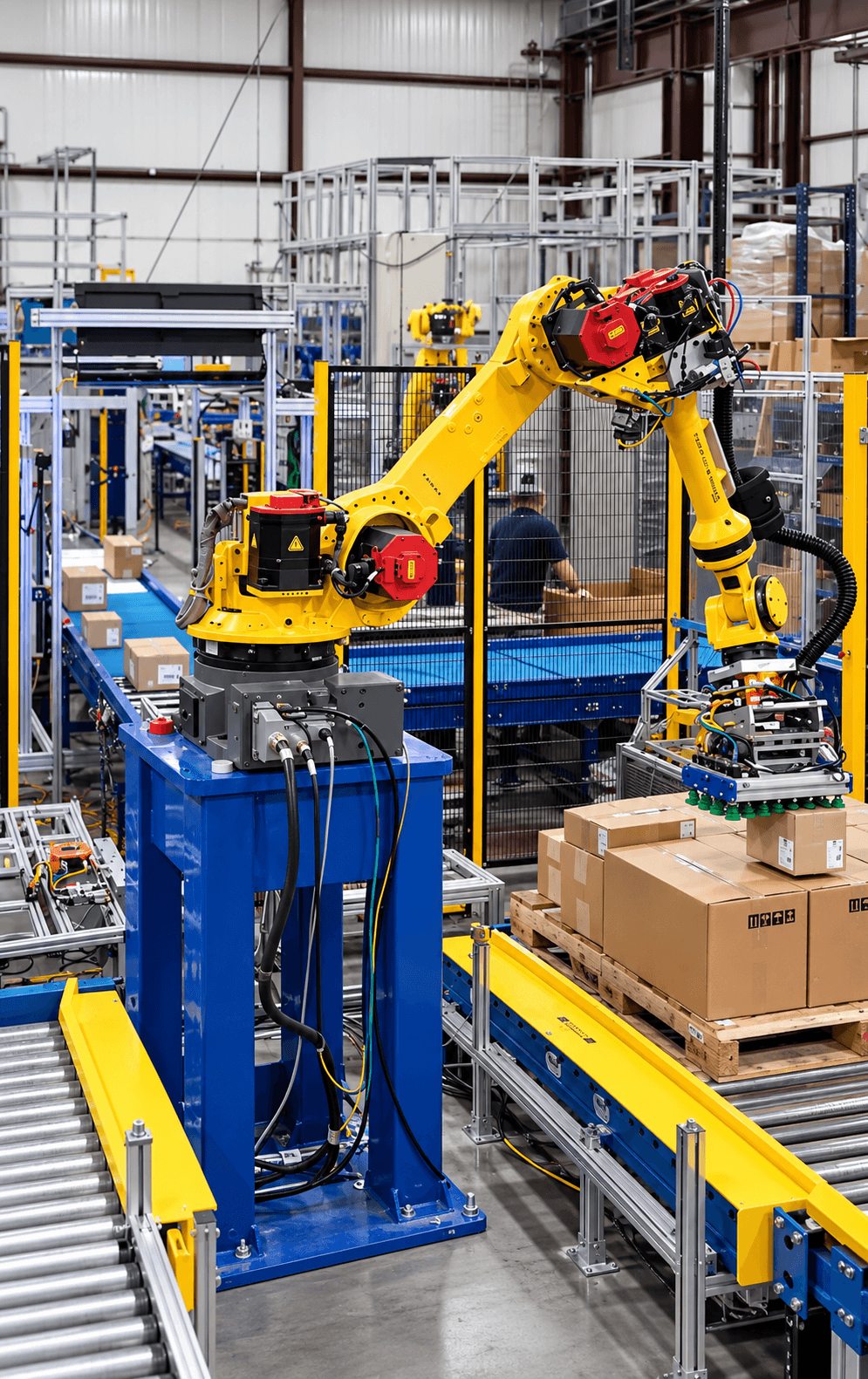
Decant automation runs in four connected stages once a case arrives from depalletizing: opening, case-to-tote transfer, consolidation, and the inventory update that makes the tote usable downstream.
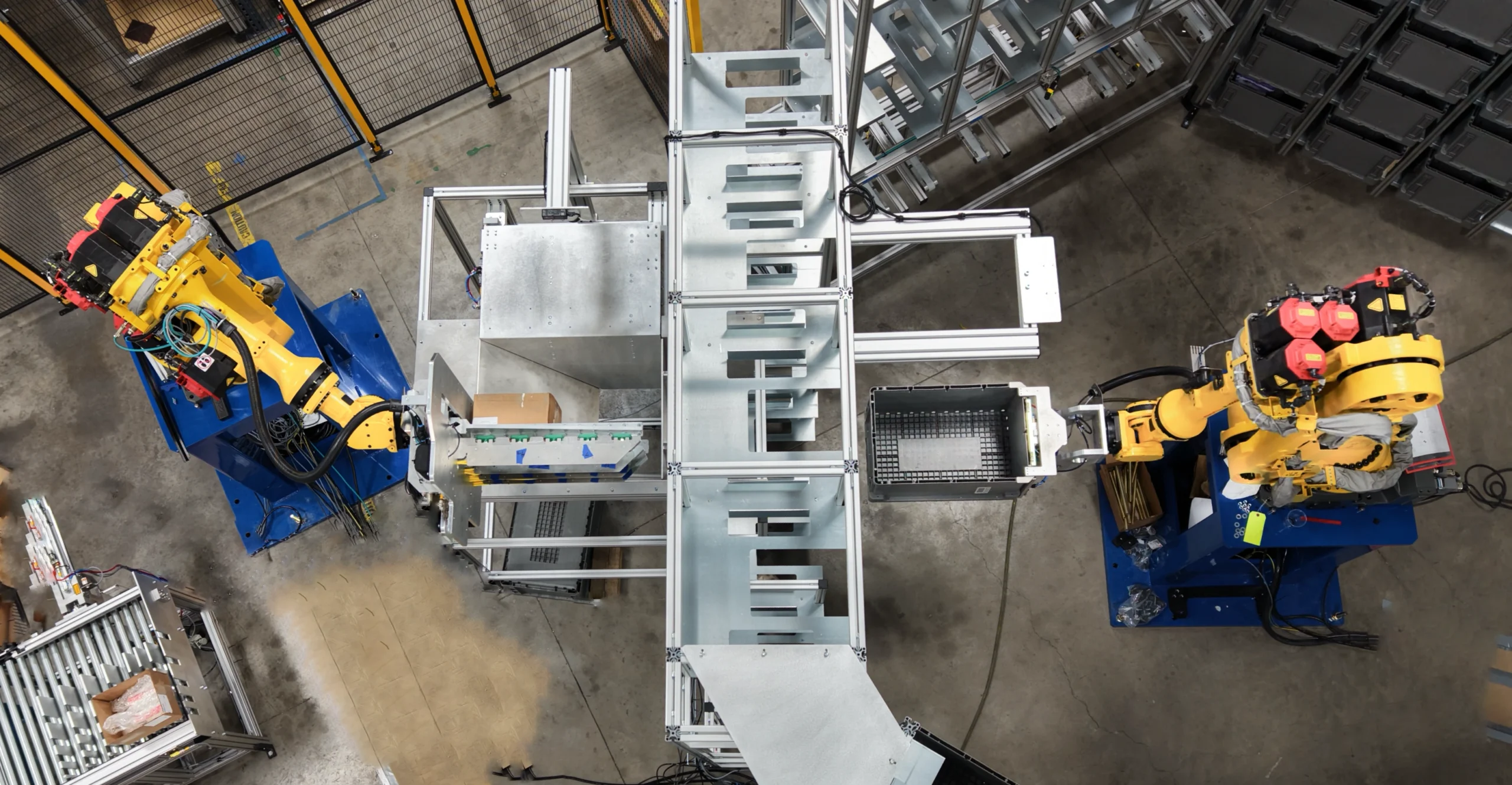
An AI vision system captures a 3D point-cloud of each case in about 30 milliseconds, reading dimensions and label position before the cut ever happens. The servo-driven cutting tool then de-lids the case at 0.1mm precision, adjusting its cut path case by case rather than running a fixed pattern, so a damaged, misshapen, or oddly taped box does not stop the line the way it stops a person with a box cutter. A single box opening machine runs up to 1,050 cases an hour, or 525 cases per lane when split across two lanes, and the system flags cases it should not open, rather than forcing every case through the same cut.
Once a case is open, the system checks whether its contents are eligible for a fully automated move. Eligible cases go to a robotic decant cell, which lifts the contents and places them into a tote in one motion, at a rate of up to 400 cases an hour per cell. Cases that need a closer look, fragile inner packs, loose product, or items requiring a QC step, route instead to a semi-automated decant station, where an operator completes the transfer at a rate of 20 to 50 cases an hour. That is not a failure of the automation, it is the exception-rate structure built into the system: most volume moves at full robotic speed, and the smaller share that genuinely needs a person gets an ergonomic station built for that task instead of forcing every case through the same manual process.
A robotic tote consolidation put wall sequences and manages totes for both the automated and semi-automated decant stations, holding 120 to 150 totes per cell so it can build the right SKU mix and cube utilization into each one instead of shipping a tote that is half empty. Multiple cases and SKUs consolidate into a single tote, or split across several, depending on the profile the downstream storage or fulfillment system needs. The put wall's job is to make sure the tote leaving the cell is fully manifested and cube-optimized before it ever reaches automated storage.
The system writes the tote's contents to the WMS and ERP the moment consolidation confirms what is inside, not on a later batch upload. That real-time write is what makes decanting compatible with automated inventory management: the on-hand record reflects the tote's actual contents within minutes, and any SKU the system does not yet recognize gets flagged for an operator to train in at the station, rather than silently failing the count. Over time, that continuous improvement loop is what expands the share of inventory eligible for the fully automated path.
The benefits concentrate in two places: the labor and safety profile of the operation, and the throughput and accuracy of what comes out of it.
Manual decanting is now the single largest labor requirement in most receiving and replenishment operations, and it is also one of the most repetitive and injury-prone: the same reach, cut, and lift motion, case after case, for a full shift. Automating box opening and the eligible share of decant work removes that motion entirely from the highest-volume stations.
The smaller share of cases that still needs a person, fragile or QC-required inner packs, moves to a redesigned ergonomic station with a large monitor and full-sized interface, not the same cramped setup with a box cutter and a stack of cases. That is a biomechanics improvement as much as an automation one, and it connects directly to the retention and healthcare-cost side of the labor equation, not just throughput.
A single box opening machine handling 1,050 cases an hour and a decant cell handling 400 replace a manual rate of 20 to 50 cases an hour per operator, and the gap only widens during peak season, when manual throughput is capped by how many people a facility can hire and train in time.
Accuracy compounds the same way: a 0.1mm cut tolerance and a scan-verified eligibility check catch what a person cutting hundreds of boxes a shift eventually misses. Tighter tote cube utilization from the consolidation put wall means fewer totes moving into automated storage for the same inventory volume, which reduces induction load on the downstream ASRS or AMR system, not just the decant cell itself.

The two approaches diverge most sharply on three factors: how safe and consistent the labor is, how much volume each can move, and how the cost curve looks as volume scales.
| Factor | Manual Decanting | Automated Decanting |
|---|---|---|
| Case opening | Person cuts each case by hand with a box cutter; rate and cut quality vary person to person | Six-axis robot with 3D vision cuts at 0.1mm precision, up to 1,050 cases/hr per machine |
| Item transfer | Person lifts contents case by case into a tote or bin, double- and triple-handled when a case needs rechecking | Robotic decant cell transfers eligible contents in one move, up to 400 cases/hr per cell |
| Tote consolidation | Built manually against a pick list; cube utilization varies by operator judgment | Robotic put wall manages 120 to 150 totes per cell for consistent SKU mix and cube |
| Exception handling | Every case gets the same manual treatment, regardless of complexity | Only fragile, loose, or QC-required cases route to a semi-automated station |
Manual decanting concentrates a full shift of repetitive reach, cut, and lift motion on the same worker, the pattern behind most of the ergonomic injury risk in receiving and replenishment operations.
Automated box opening and decant remove that motion from the highest-volume stations entirely, and the semi-automated stations that remain get a full ergonomic redesign instead of the same box-cutter setup.
A manual operator moves 20 to 50 cases an hour with a cut quality and pace that varies by person and by fatigue over a shift.
Automated box opening runs at up to 1,050 cases an hour with a 0.1mm cut tolerance that does not degrade over the course of a shift, and the decant cell behind it holds a consistent 400 cases an hour regardless of how long it has been running.
Manual decanting scales by adding headcount, and headcount cost climbs with overtime, turnover, and the training time needed to get a new hire to full speed on box-cutter work.
Automated decant scales within the installed cell's rated capacity, so the marginal cost of an additional shift is labor for exception handling only, not a full crew at the same size as the first shift.
Decant automation investment scales with case volume, the mix of automation-eligible versus QC-required SKUs, and the number of lanes and shifts run. Payback is driven by labor redeployment, tote cube efficiency, and reduced ergonomic injury exposure, not any single line item.
Three factors move the payback period most: how much of a facility's SKU mix is eligible for a single robotic move versus how much needs a semi-automated QC station, how tightly the consolidation put wall can build tote cube for the downstream storage system, and how many shifts the equipment runs across. A facility running two shifts at high SKU eligibility reaches payback faster than one running a single shift with a heavy mix of fragile or QC-required inventory, even at the same case volume.
As a standalone deployment, automated box opening delivers a 6-month return on investment, with $1.05 million in annual labor savings at a rate of 500 boxes per shift across two shifts. That figure covers box opening only, not a complete decant-to-tote system.
An unnamed Fortune 10 retail and e-commerce operator's deployment, which included automated box opening across a distribution network processing tens of millions of inbound cases a year, shows the fuller picture: at 35 million cases opened annually, the deployment produced $5.8 million in annual savings per facility against a $2.5 million system cost, with a 15.7% efficiency improvement in inbound throughput overall.
Three questions shape how a decant automation deployment should be sized and configured.
Case size range and how much of the SKU mix is symmetrical versus irregular determines how many lanes and what mix of automated versus semi-automated stations a facility needs.
Standard case handling runs 6 by 4 by 2.5 inches up to 30 by 24 by 24, with a 40-inch option for oversized freight; fragile, loose, or QC-required inner packs, cosmetics and pharmaceuticals especially, need semi-automated capacity sized to that share of volume, not treated as a rounding error.
Whether totes need a single-SKU or multi-SKU profile, and how tightly cube needs to be optimized for the downstream storage or fulfillment system, determines how many totes the consolidation put wall needs to manage at once. A cell managing 120 to 150 totes gives the system room to build the right mix before committing a tote to storage, rather than sending a partially filled tote just to clear the cell.
Decant automation only delivers accurate on-hand inventory if it writes to the WMS and ERP through a direct API at the moment of consolidation, not a batch file compiled later. Confirm this integration path before selecting a system, or the automation ends up replicating the same delay it was meant to eliminate.
Decant Automation's modular equipment, box opening, robotic and semi-automated decant, and tote consolidation, connects into ADDRIS as a complete platform alongside WES, WMS, and ERP integration, or runs as standalone equipment layered into an existing operation. A continuous improvement process tracks which SKUs are not yet automation-eligible and why, so SKU coverage keeps expanding past the original percentage from install instead of staying capped there.
An industry leader in retail and e-commerce, with a distribution operation processing tens of millions of inbound cases annually, began deploying automated box opening technology across its network. At 35 million cases opened a year, the deployment delivered $5.8 million in annual savings per facility against a $2.5 million system cost, with a 15.7% efficiency improvement in inbound throughput overall.
The result came from the same combination covered above: precision box opening, eligibility-based routing to automated or semi-automated decant, and tote consolidation that optimizes cube before inventory ever reaches storage.
Decant automation is the equipment and software that opens cases and transfers their contents into totes for automated storage, replenishment, or fulfillment, without a person cutting and unpacking each case by hand. It typically combines a robotic box opener, an automated or semi-automated decant station, and a tote consolidation system, and it sits downstream of depalletizing in the inbound process.
Depalletizing removes cases from a pallet and places them on a conveyor. Decanting happens after that, opening each case and transferring its contents into a tote. Depalletizing works at the pallet and case level, while decanting works inside the case, at the item level, which is why the two are separate steps with separate equipment.
Manual decanting relies on a person with a box cutter opening each case and hand-transferring contents into a tote or bin, at a rate of roughly 20 to 50 cases an hour. Automated decanting uses a robotic box opener and decant cell to do that work at up to 1,050 and 400 cases an hour respectively, routing only fragile or QC-required cases to a semi-automated station.
Cost scales with case volume, SKU eligibility mix, and the number of lanes and shifts run, so figures vary by facility. As a standalone deployment, automated box opening delivers a 6-month return on investment with $1.05 million in annual labor savings at a rate of 500 boxes per shift across two shifts.
Dock-to-stock automation is the full chain from truck arrival to available on-hand inventory, and decanting is one link in that chain. A facility can automate scanning at the dock and still bottleneck at decant if box opening and tote transfer stay manual, so closing the decant gap is what turns dock automation into a complete dock-to-stock chain.
Retail and e-commerce, HBA, HBC, and OTC replenishment, grocery and CPG, apparel and footwear, third-party logistics providers, and pharmacy and healthcare distribution all use decant automation, wherever case-level inventory needs to become tote- or item-level inventory for automated storage or fulfillment.
Decant automation writes the tote's contents to the WMS and ERP through a direct API the moment consolidation confirms what is inside, not through a batch file compiled later. That real-time write is what keeps the on-hand inventory record accurate within minutes of the case being opened.
Our team builds full ADDRIS design studies, including box opening, decant, and tote consolidation sized to your SKU mix, with integration into your existing WMS, WCS, and ERP.